Showing posts with label creole. Show all posts

Tuesday, October 17, 2006

Crawfish Bisque & Stuffed Crawfish Heads, interrupted.

crawfish heads, unstuffed.

Crawfish Bisque is, for the most part served with stuffed crawfish heads. I've never stuffed a head or made a bisque so I decided to put the crawfish in my freezer towards this project.

I filled a pot, threw them in a pot and boiled them. This is what it looked like when they were finished cooking:
grey sludge water
Red Flag. Disgusting water.

As the recipe directed I then started to remove the meat from the tail and separate the head from the bodies. This went okay for the first 1 or 2. Crawfish are kind of gross. More giant insect than tiny lobster. The 3rd of 4th crawfish I picked out of the pot looked like it had lived at the bottom of a toxic puddle for most of its life. I scrubbed it and the grey scum that covered the bottom of its body came off a bit but it looked like a job for ajax. Tossed that one. Picked up the next, same thing. In fact, about 70% of these guys were partially covered in sludge.

dirty crawfish? normal?

Is this normal?

Was I being paranoid and crawfish phobic when I decided to toss the lot of them? Seriously, if this is normal, I would like to know.

I have eaten plenty of bottom feeders, but never before have I come across one that needed to be scrubbed with ajax.

They came from Freshdirect.

I would really like to stuff some crawfish heads when I find some good ones. Back burner for this recipe until then.

Here is the recipe that I was going to use:
CRAYFISH BISQUE: A CREOLE DISH
(La Cuisine Creole, 1885)

Parboil the fish, pick out the meat, and mince or pound it in a mortar until very fine; it will require about fifty crayfish.

Add to the fish one-third the quantity of bread soaked in milk, and a quarter of a pound of butter, also salt to taste, a bunch of thyme, two leaves of sage, a small piece of garlic and a chopped onion. Mix all well and cook ten minutes, stirring all the time to keep it from growing hard.

Clean the heads of the fish, throw them in strong salt and water for a few minutes and then drain them. Fill each one with the above stuffing, flour them, and fry a light brown.

Set a clean stewpan over a slow fire, put into it three spoonfuls of lard or butter, a slice of ham or bacon, two onions chopped fine; dredge over it enough flour to absorb the grease, then add a pint and a-half of boiling water, or better still, plain beef stock.

Season this with a bunch of thyme, a bay leaf, and salt and pepper to taste.

Let it cook slowly for half an hour, then put the heads of the crayfish in and let them boil fifteen minutes. Serve rice with it.

UPDATE:
My sister, who is a chef, tells me I was being paranoid.

Saturday, September 09, 2006

Creole Brown Rice Calas

The best thing to do with leftover rice
DISH 41
Creole dish #4

It seems like everything creole is severed with rice and here is a great thing to do with the leftover. I used brown rice instead of white and it worked will. The only detail you have to remember is you have to prepare the rice with yeast overnight.

The word Calas was first printed in 1880, and comes from one or more African languages, such as the Nupe word kárá, or "fried cake."

Here is how to make them:
Creole Calas
* 1 pkg. active dry yeast
* 1/2 cup warm water
* 1 1/2 cups cooked short grain rice
* 3 eggs, beaten
* 1/4 cup sugar
* 1 1/4 cups all-purpose flour
* 1/2 tsp. salt
* 1/4 tsp. ground nutmeg
* vegetable oil
* 1/2 cups powdered sugar
* 1 tbsp. ground cinnamon

PREPARATION:
Dissolve yeast in water. Mash hot cooked rice with the back of a spoon; cool to lukewarm. Combine yeast and rice, mixing well; cover and let rise in a warm place overnight. In the morning add eggs, sugar, flour, salt, and nutmeg to rice mixture, beating until thoroughly mixed.

Heat 3 inches of vegetable oil in a skillet to 375°. Drop the batter by tablespoonfuls into hot oil; cook in batches until golden brown, turning once. Drain well on paper towels. Combine powdered sugar and cinnamon; sprinkle over hot calas; serve immediately.
Makes about 2 dozen.

My kids loved them, ofcourse. They are basically dougnuts.

Wednesday, September 06, 2006

Crawfish Étouffée

creole food just ain't pretty
DISH 33

new things: crawfish

I'm getting to the end of my Creole kick--at least for the time being. I had both shelled and in the shell crawfish/crayfish. I wanted to use the in the shell ones, but couldn't find a recipe for etouffee that called for the ones in the shell for anything other than garnish. I think I'll do a crawfish boil with the shell ones. I was to lazy to do a recipe that called for a dark roux, so I chose one that called for a white roux. Basically, just throwing in some flour and not darkening it at all.

It was pretty simple and straight forward. Here is how it went:
Crawfish Étouffée
serves 6
2 pounds cleaned crawfish tails
1/4 pound butter
1 cup onion, chopped
1/2 cup celery, chopped
½ cup green bell pepper, chopped
½ cup red bell pepper, chopped
1 cup tomatoes, diced
2 tbsp garlic, diced
2 bay leaves
1 cup flour
2 quarts fish stock
1 ounce sherry
1 cup green onions, chopped
salt and cayenne pepper to taste
hot sauce
2 cups white or brown rice
In a stock pot or dutch oven melt butter over medium-high heat. Add onion, celery, bell peppers, tomatoes, garlic and bay leaves. Sauté until vegetables are wilted, approximately 3-5 minutes. Add crawfish tails and tomato and blend well into mixture. Blend flour into the vegetable mixture to form a white roux. Slowly add fish stock or water, a little at a time, until sauce consistency is achieved. Continue adding more stock as necessary to retain consistency. Bring to a rolling boil, reduce to simmer and cook 30 minutes, stirring occasionally. Add sherry, green onions and parsley and cook an additional 5 minutes. Season to taste using salt and cayenne pepper. Serve over rice and add hot sauce for desired heat.


It was fine. I'm over the creole flavor for now. I think I'll like it better in a few weeks when I defrost it and try it again.

Sunday, August 27, 2006

Gumbo

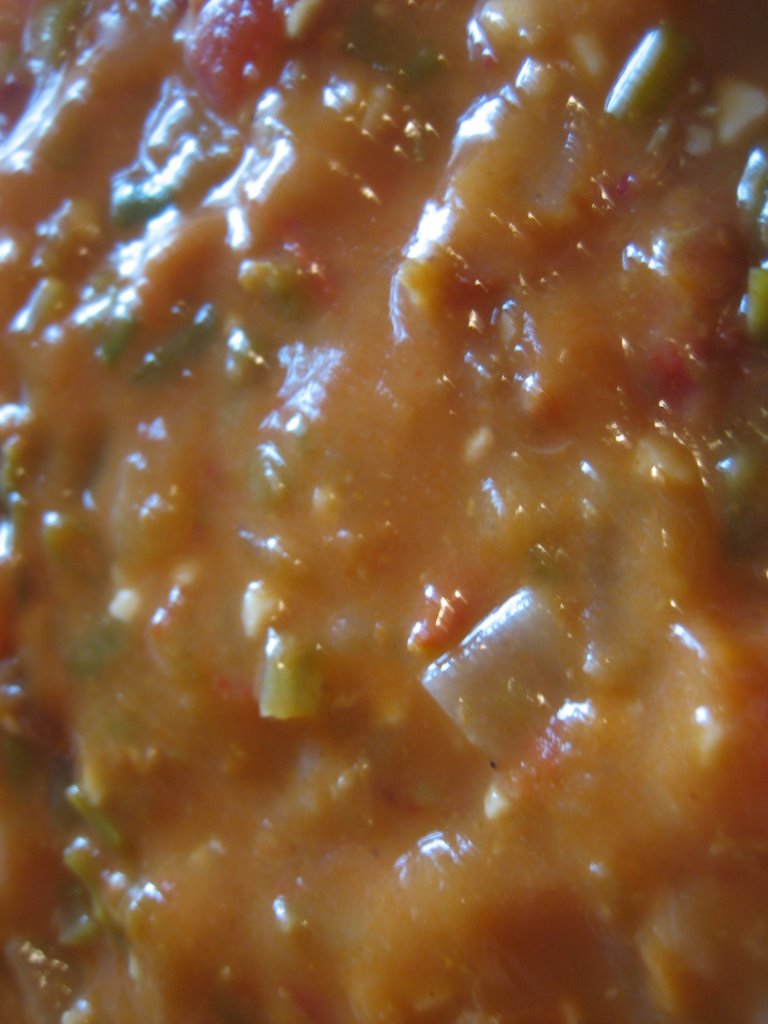
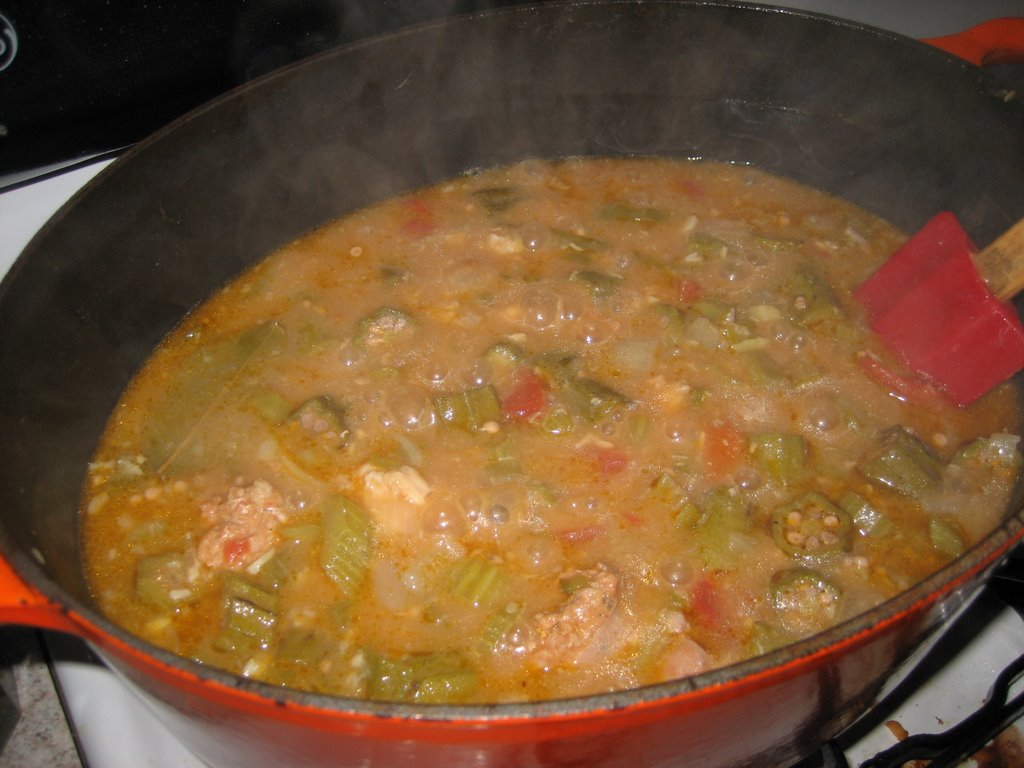
gumbo also does not make a pretty picture
DISH 28
I'VE NEVER. . . cooked okra, made gumbo, cooked catfish

The 3 things that I wanted in a recipe were:
  1. to use okra
  2. to use just okra and not both okra and to use Filé powder
  3. to make a gumbo with to use roux

I looked at maybe 200+ gumbo recipes before choosing this one and most of them were totally different from one another. Some cooked for 30 minutes, some for 12 hours. Some had roux, some didn't. Some used okra, some file and some neither (although it is my understanding that is ain't gumbo without file powder or okra).

There are 2 things that most gumbos have in common:
The first is Gumbo relies heavily on what people refer to as the holy trinity of creole flavors; celery, green pepper and onion.

The second is roux. It is kind of a pain in the ass to make as you have to constantly stir it for 20+ minutes. Roux is not something you can walk away from. I stopped stirring for 15-30 seconds at a time to chop vegetables, but never longer than that.

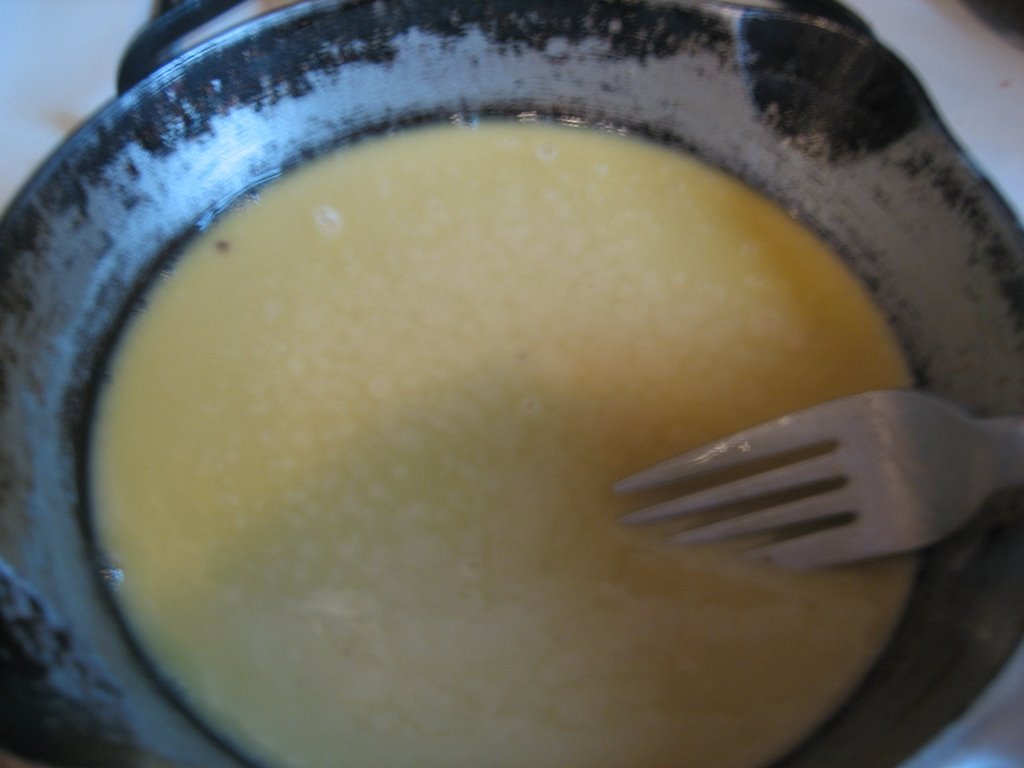
roux after 5 minutes of cooking


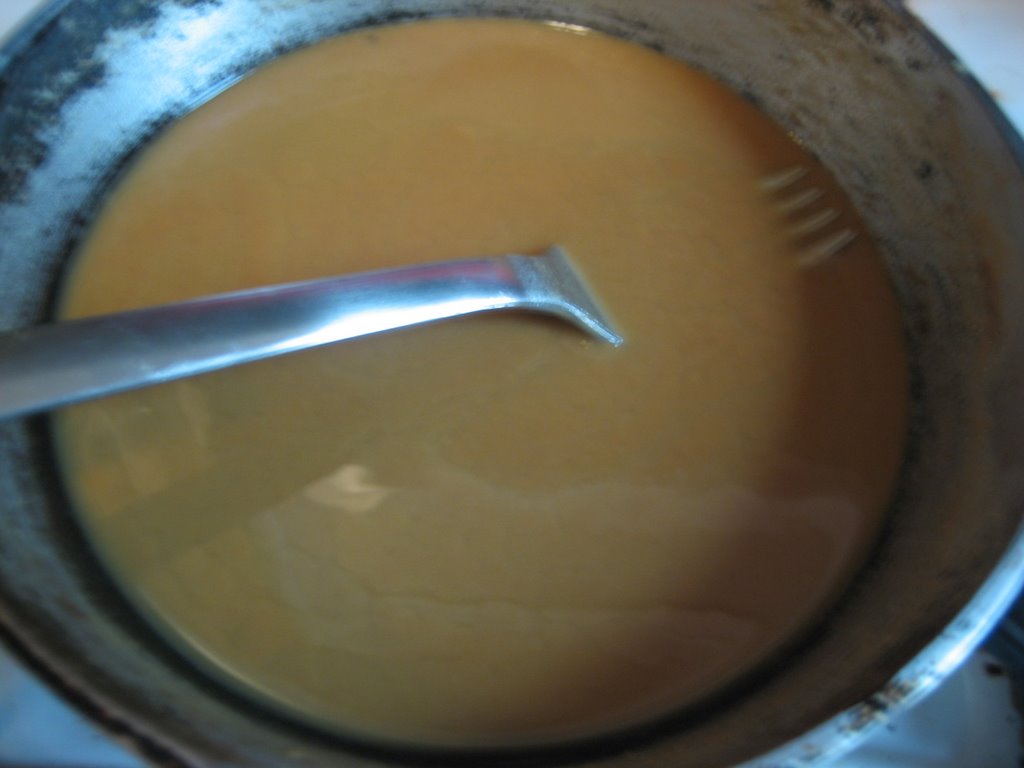
roux after 20 minutes of cooking (you can cook roux until it is a deep brown if you like and your wrist hold up)

The name Gumbo, derived from various Bantu dialects (Southern & Central Africa) terms for okra (i.e. quingumbo, grugombo, gumbo, gombo, ngombo gomboaud, ngumbo, ochinggombo). (The word is one of very few African language words brought over by slaves which have entered the English language. Some of the others are goober or goober pea (peanut) also of Bantu dialect origin, Yam from West Africa, and cooter (turtle) of Bantu and Mandingo origin.

That little nugget came from here.

Here is the recipe I settled on:

Sausage & Catfish Gumbo
1/2 cup vegetable oil
1/2 cup flour
4 garlic cloves
2 cups chopped onions
1 cup chopped celery
1 cup chopped green bell pepper
10 ounces frozen cut okra --If you use fresh chop up and soak in water overnight and then rinse
before using.
14 ounce can diced
5 cups chicken stock
1/2 teaspoon ground cayenne
1 teaspoon salt
2 bay leaves
1 pound Andoulle cut into 1/2 inch chunks
6 catfish fillets, washed and chopped

Make a roux with the oil and flour, browning it slowly and stirring frequently. Cook over medium heat for about 30 minutes until it is a rich milk-chocolate color. When the roux is just right, add the garlic, onions, celery, and green pepper, stirring vigorously. Cook 2 to 3 minute
s. Turn the heat to low and cook 15 to 20 minutes, stirring occasionally.

Skim any excess fat off the top.

Add the remaining ingredients and simmer for 1 hour or more. Stir occasionally.
Makes: 3 quarts


While I was making this I was quite put off. Maybe it was the catfish or how slimy to okra was. Maybe it was just that it looked disgusting. I was pretty sure I wasn't going to eat any. Then, sort of by accident I tasted it. I just put the spoon in my mouth between it's trip from the gumbo pot to the sink. My gumbo was good. I'm going to eat more. My 10 mo. son is eating it as I type. But, he's like Mikey. He'll eat anything.


Saturday, August 26, 2006

Jambalaya Suppli

amazingly good fried treat

DISH 27

You read it right. I figured out a way to combine Cajun and Italian food. I thought I was being really original, but then I realized Two Boots does the same thing. I'm going to mention this one to Doris and see what she thinks.

I had an enormous amount of left over jambalaya from last night which doesn't reheat very well and I can't really freeze it so it is either throw it away (which kills me) or recycle it.

I lived in Rome for a year abroad in college. While there I subsisted mainly on boxed wine and amazingly delicious pizza rustica. These large, rectangular pizzas would come as simply as just olive oil and salt or as exotic as with arugula, shrimp and mayonnaise. The pizza was should by the ounce so when ordering it you'd point to what you want and then make hand motions describing the size piece you'd like. I have only found one place in the US that has anything like it. It's called Amorina Amorina at 624 Vanderbilt Ave. Brooklyn NY. Most of pizza rustica places in Rome would also sell fried and breaded stuffed rice balls called suppli. A bit bigger than a golf ball, smaller than a tennis ball and changed slightly in ingredient depending on the region of Italy you were. In Sicily, they would be stuffed with meat and sometimes had peas in them- a more African influence. In Rome, they would be stuffed with a bit of cheese. They cost 1000 lire or $.70 so they were dirty cheap.

I went searching for a recipe, found that the rice filling was prepared very similarly to risotto or jambalaya. I had a bag of panko left over from an earlier soufflé recipe.

Here is how it went:

Jambalaya Suppli
left over jambalaya, risotto or similar
egg-beaten
oil to fry with (I used canola)
panko (worked great!) or other bread crumbs

roll approx. 3 tbs. balls of jambalaya
dip and coat in egg
roll in panko
fry in HOT oil for 2 minutes per side

Eat while hot.

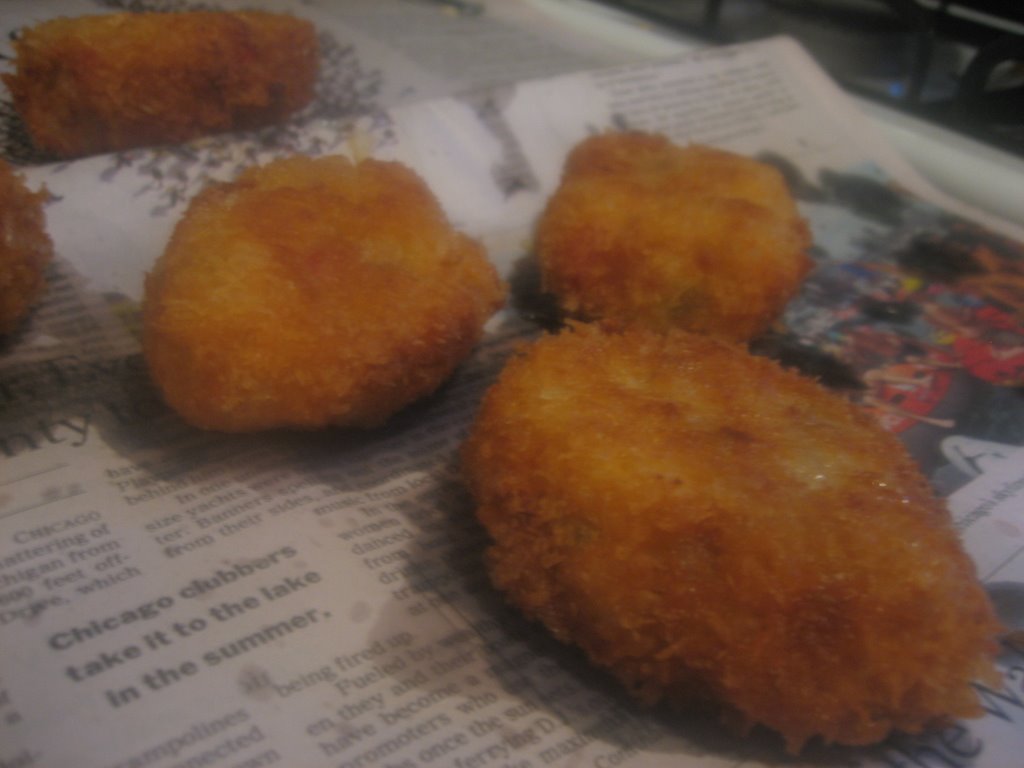
These were so good that I ate them all. Usually when I cook, I eat just a small amount. This time, I made 5 thinking my daughter would try one, My Husband would have 3 and I would eat one. I couldn't stop myself. After the first one I broke out the Thai chili sauce and ate them with that. They would be great for a party.

Friday, August 25, 2006

The 2 Truths of Jambalaya

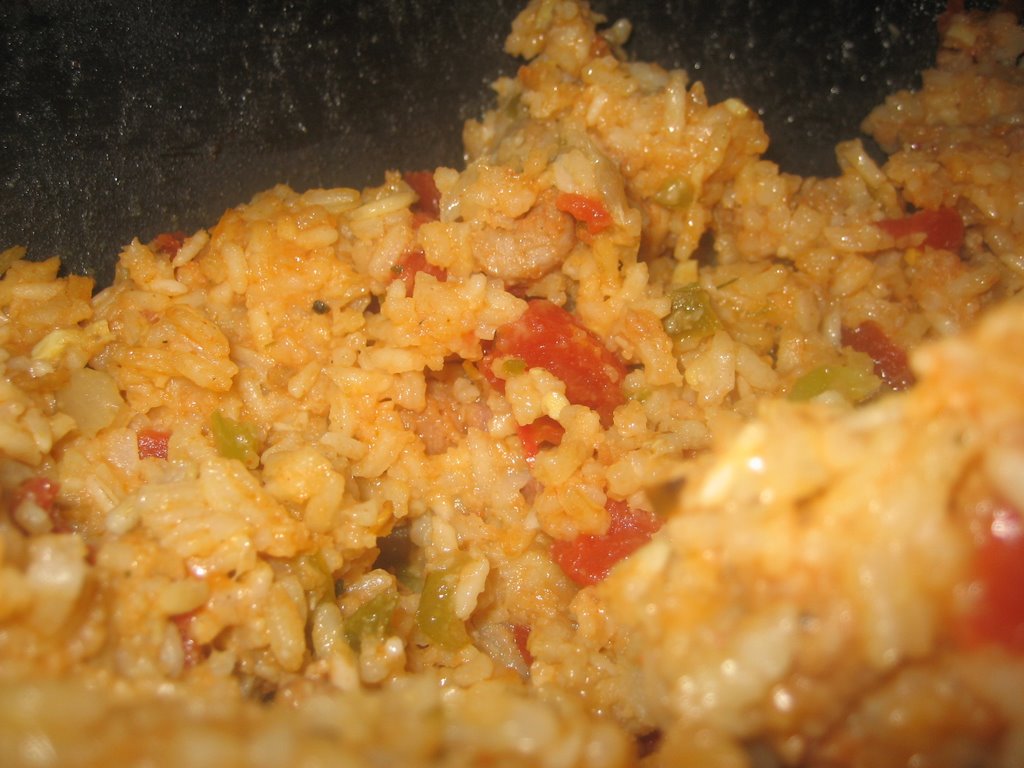
The ugly jambalaya
DISH 24

Last night while making Jambalaya, I learned 2 things.
  1. You cannot take a pretty picture of it
  2. You cannot make a small amount of it.
Both suck, but the fact you cannot freeze leftovers without totally destroying them, makes the #2 issue suck more.

I made a mountain of it. I could have fed half of Brooklyn with what I made. And I cut a 10 serving recipe in half.

I also did some research about jambalaya before I made it so I could make a more traditional one. Wikipedia has good info, among which is this nugget:
Prominent among them is the combination of the French "jambon" meaning ham, the French article "à la" meaning "in the style of" and "ya", thought by some to be of West African origin meaning rice, though "ya-ya" is also an old Creole patois phase meaning "everybody's talking at once."
The other thing is that jambalaya is both Creole and Cajun. I never actually knew that there was a difference. Creole is more city – urban, cosmopolitan, and French-inspired – while Cajun is more country, with simpler recipes and more common ingredients. Cajun cooking uses foods that one could grow, fish, shoot or catch in the mid-southern LA region. Actually, the whole Cajun history is really interesting. There are ethnic cajuns as well are folks who culturally identify with the Cajun tradition and call themselves cajun. They came first from France and then Canada, where they are known are Acadians, then forced out of Canada to Southern Louisiana.

A few years ago my sister and I drove from Laredo Texas to the southern most point in Louisiana via the southern most back road route. We drove down this peninsula that ended at the mouth of Brenton Sound. On this peninsula I couldn't understand anything people were saying to me at the grocery store or gas station and it took me a few minutes before I realized that they were speaking with very heavy Cajun accents. It was thrilling. We also got great food down there.

Anyway. The history of Cajun and Creole and what sets them apart are more interesting than the Jambalaya but here is the recipe anyway. I never used andouille before.

JAMBALAYA
1/2 stick (1/4 cup) butter
2 red onions, chopped
1 large green bell pepper, chopped
4 garlic cloves, finely chopped
2 bay leaves
1 jalapeño chili, finely chopped with seeds
1 tablespoon Creole Seasoning
1/2 teaspoon ground cayenne pepper
1/2 teaspoon dried oregano, crumbled
2 tablespoons tomato paste
1 pound andouille sausage cut into pieces
3/4 tasso, cut into 1/2-inch pieces (I used a smoked ham steak instead)
28 ounce chicken broth
28 can plum tomatoes, diced, with liquid
3 cups long-grain rice

Melt butter in heavy large Dutch oven over medium-high heat. Add red onions, bell pepper, garlic, bay leaves, jalapeño, Creole Seasoning, cayenne pepper and oregano. Cover and cook until vegetables are tender, stirring occasionally, about 15 minutes. Mix in tomato paste. Add sausage, tasso, broth, tomatoes and rice. Bring mixture to simmer. Reduce heat to low, cover and cook until rice is very tender, stirring occasionally, about 1 hour.
Serves 10.

It was good, spicy, very filling. Too spicy for my kids to eat it.

del.icio.us tags